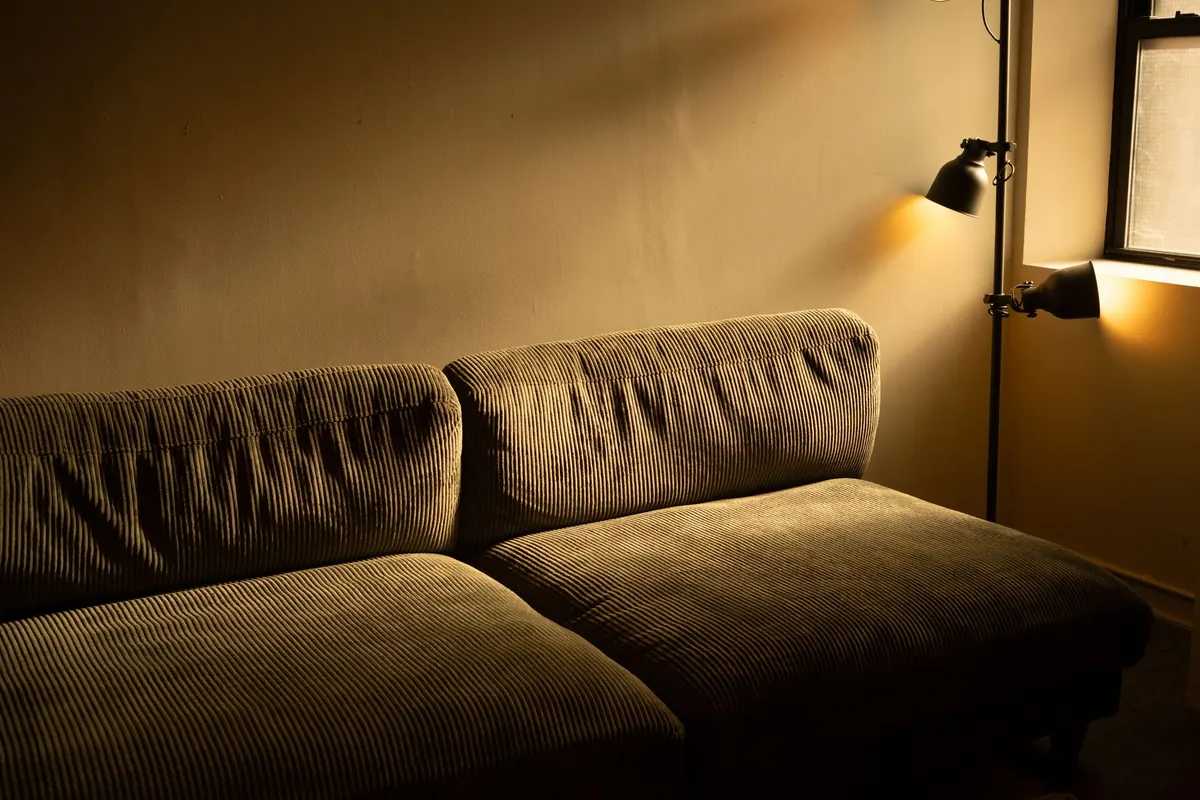
A living room lit by one ceiling fixture feels like a doctor's waiting room, no matter how nice the sofa is. The light comes from above, it hits you straight in the eyes, and it flattens everything in the room. Cozy light works the other way around: it comes from several low places, it's warm in color, and it's easy to turn down. None of that requires a renovation or an electrician. It requires a plan, a handful of lamps, and the willingness to stop using the big switch on the wall.
Professional lighting designers talk about layers, and the idea is simple enough to borrow. Instead of asking "how do I light this room," ask what each light is for. In a living room, you usually need three jobs done:
Most homes have only the ambient layer, and it's the wrong one. Add the other two and the room starts to feel inhabited. Aim for at least three separate light sources you can switch on independently, so you can dial the room up or down without touching a dimmer.
Bulb color matters more than the lamp itself. Look for bulbs marked 2700K for a warm white that still reads as light, or 2200K if you want the amber glow of an old incandescent. Anything at 3500K and above belongs in a garage or an office, not a living room.
Match the color temperature across every bulb in the room. A 2200K bulb in one corner and a 4000K bulb in the other makes the whole arrangement look accidental, and the cooler bulb will make the warmer one look orange and dim by comparison.
Warmer and dimmer is almost always better than brighter. A table lamp with a 400 to 800 lumen bulb is plenty for a living room corner; a 1600 lumen bulb in the same shade will blow out the wall behind it. If you're replacing old incandescents, a 40-watt equivalent LED is a reasonable starting point. Buy one, live with it for an evening, then buy the rest.
Start where the light is missing, not where the furniture is. Corners and the ends of the sofa are usually the darkest spots, and they're also the places where a lamp adds the most depth.
Two matching table lamps at either end of a sofa do more for a living room than any other single purchase. Keep them at the same height so the light feels balanced, and choose shades that are wider than the base. A lamp whose shade is too small throws a narrow beam that reads as a spotlight.
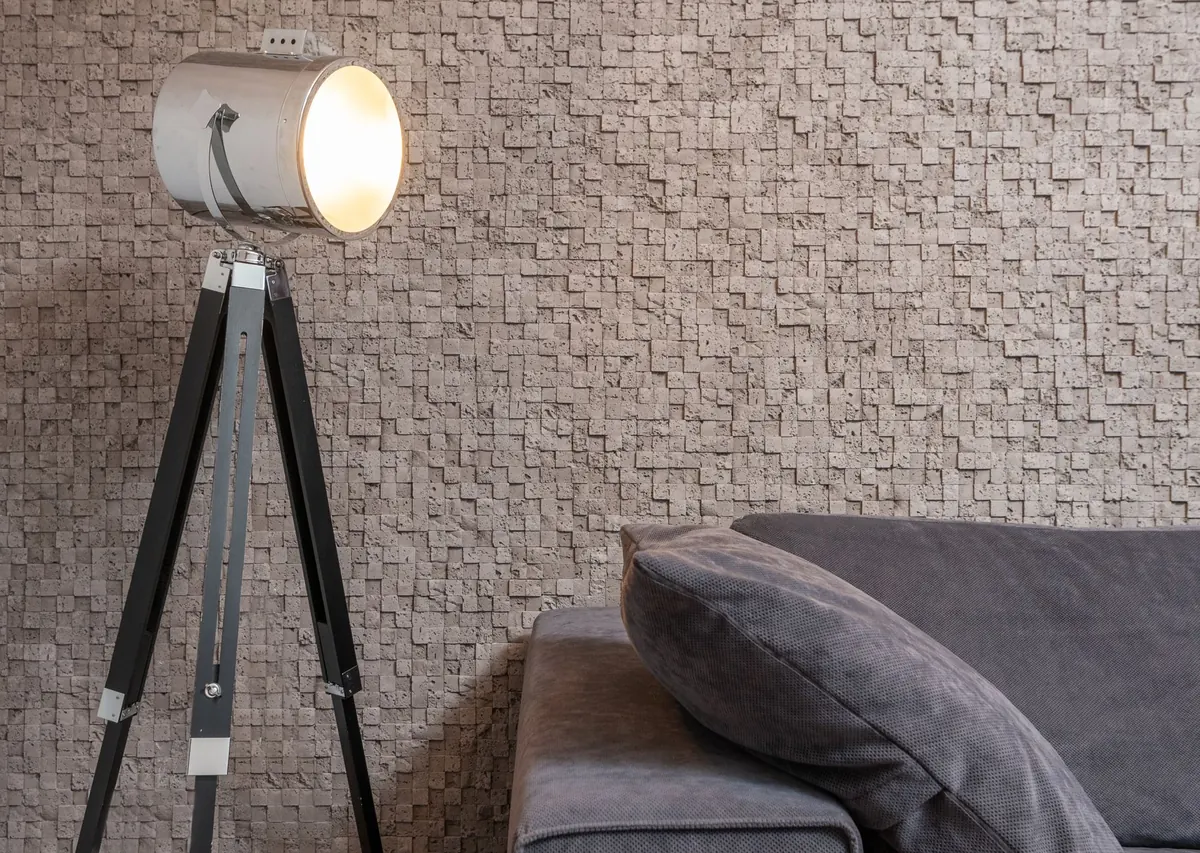
A floor lamp works best behind a reading chair or beside a bookcase, where it can wash a wall instead of aiming at a seat. If you have room, a wall sconce on either side of a picture or mirror gives you light at eye level without taking up surface space. Plug-in sconces exist for exactly this situation and need no wiring.
Vary the heights. If every light sits at the same level, the room looks staged. A tall floor lamp, a mid-height table lamp, and a cluster of candles on the coffee table create three different pools of light, and the eye has somewhere to travel.
Candles bring two things bulbs can't: a slight flicker and a very small, very warm source. Group them rather than scattering one per surface. Three candles of different heights on a tray reads as a deliberate arrangement; one lonely candle on a side table reads as a leftover birthday.
Places that work well: on the coffee table, on a mantel, inside a fireplace that isn't in use, or on a dining tray near the sofa. Mirrors and glass trays bounce the light around and make a small flame feel like more than it is.
If you burn real candles, treat them like the open flame they are. Never leave a room with one still burning, keep them clear of curtains, books, and anything that might drift into the flame, and trim the wicks so the flame stays small and steady. Battery candles with a warm LED and a subtle flicker are a sensible stand-in for shelves, mantels, and anywhere pets or children are in reach.
A dimmer is the difference between a room that has one mood and a room that has five. If you have a switched outlet, a plug-in dimmer costs little and works immediately. For ceiling fixtures, a wall dimmer is a small job for an electrician or a confident DIYer, and worth it in a room you use every evening.
Two technical notes worth knowing. First, LEDs must be labeled dimmable, and the dimmer needs to be compatible with them, or you'll get flicker, buzzing, or a light that jumps from bright to off with nothing in between. Second, so-called "warm dim" or "dim-to-warm" bulbs shift from a soft white toward amber as you lower them, which mimics how incandescent bulbs behaved and is exactly what you want after dark.
A workable pattern for the evening:
If your lamps aren't on dimmers, smart plugs and smart bulbs give you the same control from a phone or a voice command, and most let you set a warm, low scene with one tap.
Glare is what makes a room feel harsh, and it almost always comes from a bulb you can see. Walk around the room and look at each light from a seated position. If you can see the bulb itself, fix it.
Two or three dim sources will always feel softer than one bright one, even when the total amount of light is the same.
Try this tonight and see how the room feels at eight o'clock instead of noon.
Do that a few evenings in a row and you'll notice which lamp is doing the heavy lifting and which one is only there for show. Then you can add, swap, or move a single piece rather than buying a whole new lighting scheme — which is how cozy rooms get built, one warm pool of light at a time.
Photo: Josh Sorenson / Pexels